
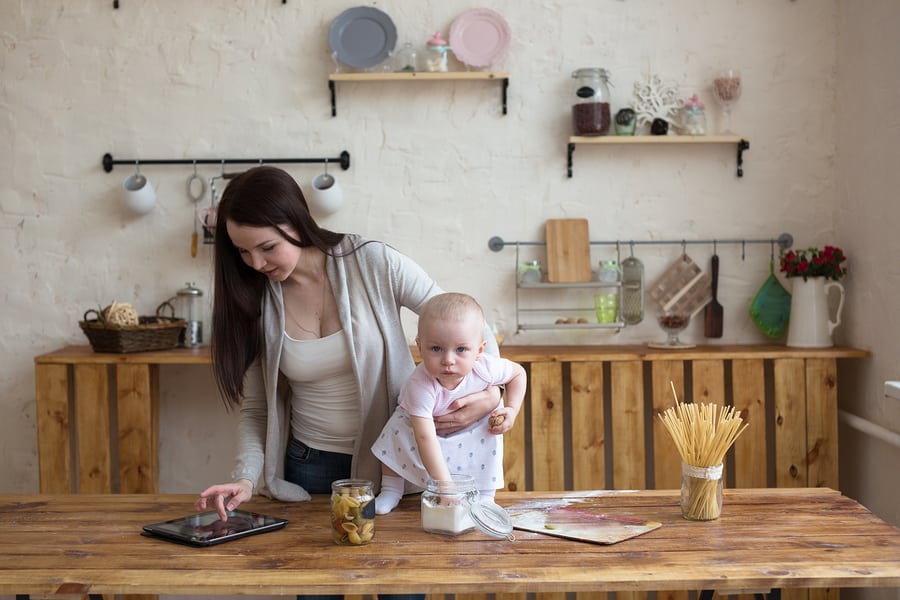
Social Media: Are You Monitoring Your Own Public Profile?

Social media is a largely unavoidable aspect of modern life.

And the ways parents monitor their children’s social media presence varies greatly…

Some insist on being ‘online friends’, some sneak through their child’s profiles without their knowing (a post for another day), or some ban social media completely.

But with all the focus we put on trying to protect our children from the many implications of a social media presence…

How much time are we taking to look at the impact of our own?

Read more

Why Gratitude can be the Key to Happiness

It’s a given that most parents want to raise their children to be grateful.

We intuitively believe that being grateful will lead to a number of good habits and qualities: politeness, humility, and respect, to name a few.

But what can be easily overlooked is that an inherent sense of gratitude is not only beneficial for our experience and interaction with others…

It can also be one of the greatest gifts we can give to ourselves and our children.

How?

Read more

Helping Childhood Anxiety with a ‘Worry Box’

The prevalence of childhood anxiety has more than doubled in the last twenty years.

And while we all experience anxious feelings at times, certain children will suffer more greatly, with their anxieties interrupting the functioning of their daily lives.

This could mean that it affects their sleeping, their socialising, or their ability to concentrate at school.

We’ve discussed a number of techniques for dealing with childhood anxiety on the blog…

But a useful tool for very young kids dealing with anxiety can be introducing a ‘worry box’ into their daily routine.

Read more

Dealing with the Immense Pressures of VCE

We’ve talked about motivation and success when it comes to study and examinations.

But an increasingly important issue surrounding these ideas is the pressure that is put on our students…

By the education system, by parents, and by the students themselves.

Studies show that in Australia, we are bordering on an adolescent mental health epidemic.

Instances of anxiety and depression in young people are becoming increasingly and alarmingly common.

And a huge source of these conditions is stress from schooling.

The pressure is even taking a toll on parents, with a mental health organisation setting up extra counselling services for parents of high school students.

So how do we help our kids, and ourselves, to deal with the pressure?

Read more

VCE Motivation: Bribery, Threats and Restrictions, but at what cost?

Our staff psychologist Christina Rigoli was quoted on page 3 of The Age today, discussing the tactics parents use to motivate their kids to study.

Among them — bribing with $18,000 holidays, threats of boarding school, and house-wide technology freezes!

The parents confessing to these ‘motivation tactics’ said their efforts paid off, but this is more a matter of chance than formula.

The key distinction in this equation is that there is no one-size-fits-all approach to motivation…

What may work in encouraging one child could backfire and have the opposite affect on another.

So how do you know what the right method of motivation is for your child?

Read more

Is Your Child Suffering, or are You?

An interesting article in The Age recently brought up concerns regarding parents who may be unnecessarily anxious about their children’s health.

The article cited a recent survey that showed that 75 per cent of pediatric specialists said many of their referrals could have been handled exclusively by the referring GP.

The relevant issue at hand here is that parents are increasingly seeking out specialist support for normal issues in childhood development…

Common issues such as bed-wetting, constipation, and even concerns about their children’s height.

This speaks to an increasing anxiety among parents, and their quest to ensure their child is developing ‘normally’.

Understandably, this kind of pattern of anxious parenting comes up not only in the physical development of the child, but also their emotional and psychological development.

So how can we know when we’re self- or over-diagnosing our children?

Read more

What Do You Do if Your Child is the Bully?

Bullying is likely to affect your child during some part of their young lives.

In fact, Government-funded research showed that one in four students will encounter bullying during their school years.

Yet the frequency with which bullying occurs doesn’t diminish the significance of its impact.

And as heartbreaking as it can be when your own child is the victim of bullying, learning that they may be the perpetrator can be an even bitterer pill to swallow.

But when it comes to bullying — on whichever side of the coin — it’s important to address the issues at hand, as soon as possible.

So what should we consider when we think our own child may be the bully?

Read more

The Problem with Championing ‘Success’ Over Kid’s Love of Learning

If you saw our blog post about how to raise motivated children, you will be familiar with the concept of the ‘Fixed’ versus ‘Growth’ mindset.

In a nutshell, this distinction in ‘mindsets’ focuses on the idea that what makes people successful is motivation, dedication and commitment, rather than innate ability or intelligence.

And that the former are the qualities that we should be praising and instilling in our children.

A recent article in The Atlantic furthers some of the ideas that come from the Fixed versus Growth mindset model, in what one parent describes as the ‘crime against learning’.

Read more

A Golden Rule of Parenting – Stop Thinking Everything You Do Is Wrong

Our aim with this blog is to help individuals with some of the challenges that come with being a parent or caretaker.


We aim to give professional, impartial and educated advice from our team of psychologists, while citing credible sources and expert references from around the world.

But even if you’re not looking for it and not on this blog, you — like so many others — are likely inundated with parenting advice from every man and their dog on a daily basis…  in the news, on social media, from other parents, or from overheard conversations in cafes!

It’s no wonder that seeking out parenting advice, in general, can be a very overwhelming experience.

So a recent article in The New York Times brings up a single, inspiring piece of advice that can be universal to all concerned parents:

Stop thinking everything you do is wrong.

Read more

How Much Screen Time is Too Much?

Lisa Wilkinson recently made some controversial comments about parents who let their children have ‘screen time’ under the age of five.

Wilkinson called these parents ‘crazy’ and said:

‘Come back to me when they’re 14 and they’re completely and utterly addicted to their screens, they have no social skills, that’s when you realise that what you did early has come back to bite you’.

Many parents have understandably been offended by Wilkinson’s comments.

Not only is the use of digital technology increasingly prevalent and useful in the adult world, but it’s also an important part of school curriculums — even in kindergarten.

And let’s be honest — the interactive and dynamic medium entrances kids, and can give parents some valuable time to get their own things done.

So what is the right amount of screen time for children, if any?

And how do we moderate their usage?

Read more

How can we help?

Book your initial parent consultation to get the right advice for your child's needs

Book Now »

Got any questions before you book? Click here to request a phone call and a psychologist will call you at a convenient time (prospective clients only). Please keep in mind we are often busy with clients but we do our best to respond to all enquiries within one business day. :-)

Why have 2,866* parents chosen us?

(*As of 24th July, 2019.)

  • Private and confidential: We are a private service so you will receive 100% independent and confidential advice.
  • Child and adolescent experts: We only work with school age children, teenagers and parents.
  • Education and school experts: We will help you navigate the school system to get the best possible results for your child.
  • Qualified and experienced: We only employ psychologists with a master degree or higher and experience working in schools.
  • Fast appointments: We don't keep a waiting list and see most new clients within 7 days.
  • Convenient location: We are in Middle Park with easy access from many parts of Melbourne and unrestricted street parking.
  • Trusted methods: We use approaches that are strongly supported by research evidence or clinical experience.
  • Lovely beachside office: You will love our quiet, modern and attractive office, with its beach and ocean-themed rooms.